022025-10
Coconut Shell Activated Carbon for Gold Recovery
A practical guide to coconut-shell activated carbon for gold recovery: iodine value, hardn

Applications / Gold Recovery
Which carbon for gold recovery — CIP/CIL or heap leach, coconut or nutshell? This page tells you.

| Process | Characteristic | Recommended | Iodine |
|---|---|---|---|
| CIP/CIL | Agitated tanks, full carbon-slurry contact | Coconut shell gold carbon | ≥1000 (mainstream) |
| Heap Leach | Low-grade, high-tonnage, open-air heap | High-iodine coconut or nutshell carbon | Coconut ≥1050 / nutshell ≥900–1000 |
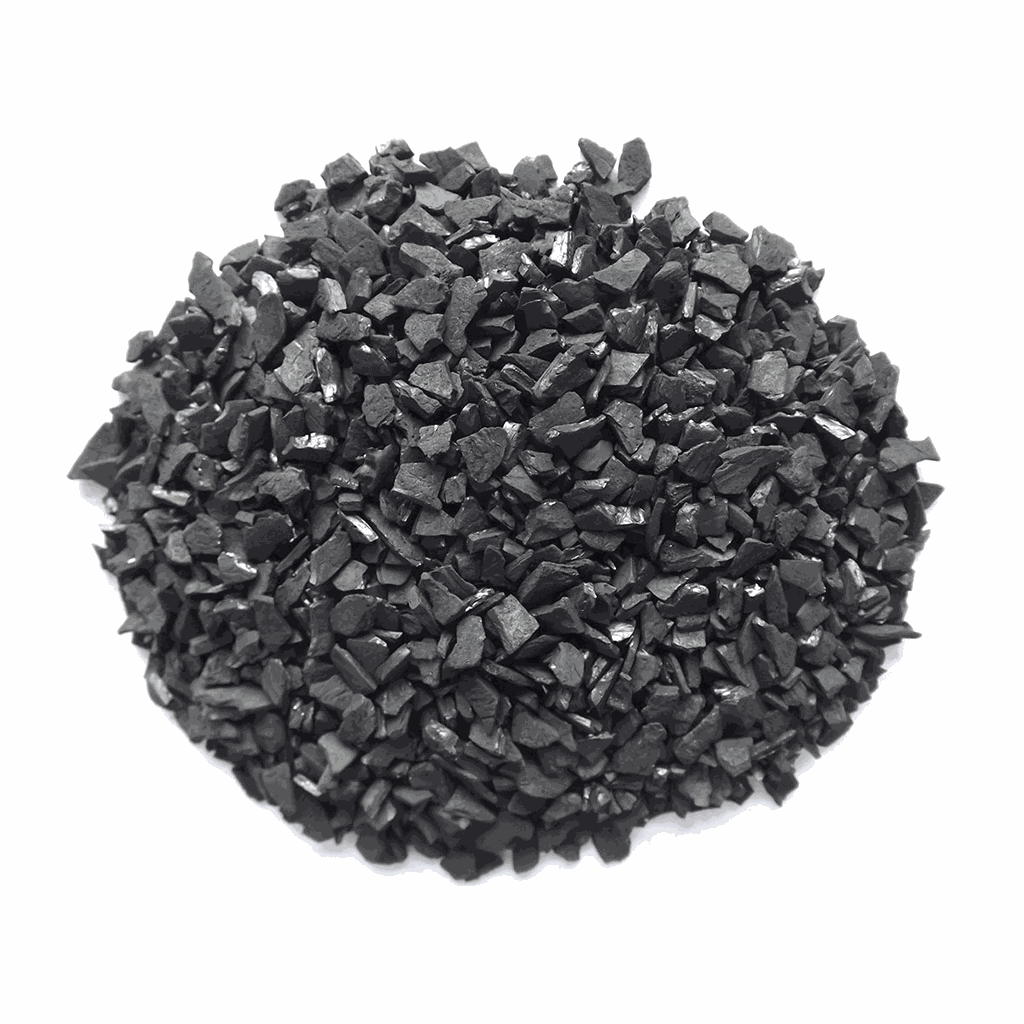
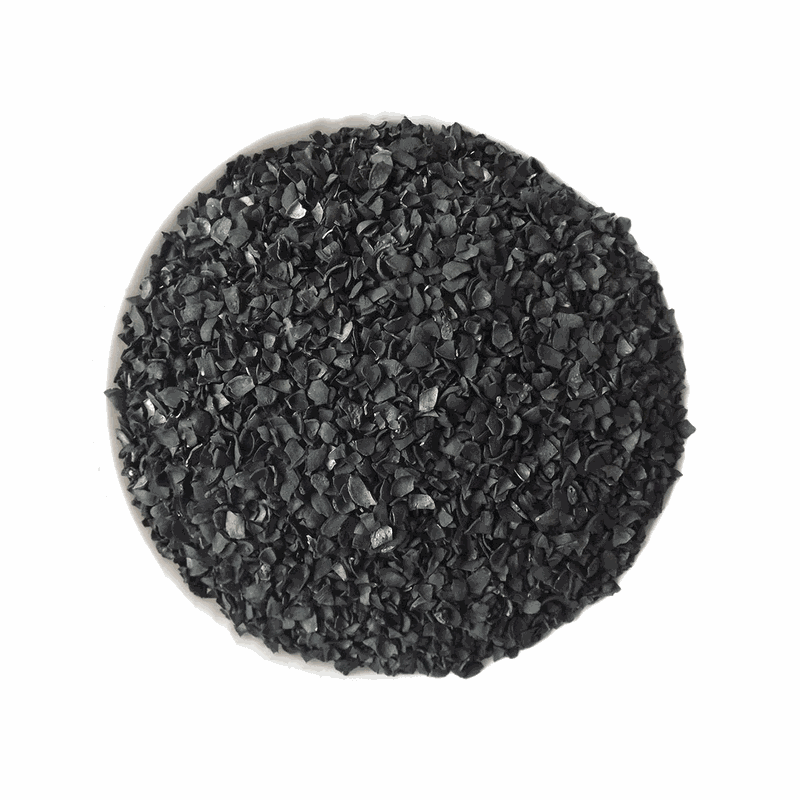
Gold ore is ground into slurry and cyanide-leached, then activated carbon adsorbs the dissolved gold in agitated tanks. The carbon is stirred and circulated hard, so abrasion resistance is the hard requirement — broken carbon is lost, and with it, gold. Mainstream choice is coconut shell gold carbon: iodine ≥1000, hardness ≥98, 6×12 mesh.
Low-grade ore is stacked into large heaps, and a cyanide solution percolates through to dissolve gold, which is then adsorbed onto carbon. High-tonnage and cost-sensitive: for maximum efficiency use high-iodine coconut (≥1050); for value use nutshell carbon (iodine ≥900–1000).
| Dimension | Coconut | Nutshell (apricot shell) |
|---|---|---|
| Iodine | High (≥1000, up to 1050+) | Slightly lower (900–1000) |
| Hardness | High (≥98%) | Medium (≥95%) |
| Cost | Higher | Lower |
| Use | CIP/CIL & high-demand heap leach | High-tonnage heap leach / cost-sensitive |
Adsorption activity — the higher, the greater the gold-loading capacity. Mainstream for CIP/CIL is ≥1000; high-iodine heap-leach grades reach ≥1050.
Resistance to breakage as carbon is stirred and circulated; the lower it is, the more gold is lost. CIP/CIL requires ≥98%.
6×12 mesh is the gold-recovery sweet spot — fast adsorption and easy screen recovery. ≥95% fraction indicates uniformity.
Affects slurry ratio and carbon dosage; 0.45–0.55 g/ml is the mainstream range.
| Your Situation | Recommended | Product |
|---|---|---|
| CIP/CIL, maximize gold yield | Coconut gold carbon (iodine ≥1000) | Coconut Shell Gold Recovery Carbon |
| Heap leach, low-grade & high-tonnage, cost-sensitive | Nutshell gold carbon (iodine ≥900–1000) | Nutshell Gold Recovery Carbon |
| Heap leach, maximum adsorption efficiency | High-iodine coconut (iodine ≥1050) | Coconut Shell Gold Recovery Carbon |
Not recommended. CIP/CIL carbon must withstand long circulation in agitated tanks, so high abrasion resistance is essential; heap-leach carbon has a different contact pattern and iodine grading. Match the carbon to your process for optimal adsorption and carbon consumption.
No. Higher iodine means higher gold loading but also higher cost. For CIP/CIL, ≥1000 is sufficient; for high-tonnage heap leach, 900–1000 nutshell carbon is more cost-effective. The key is the right process plus on-spec parameters, not chasing the highest iodine.
A particle size range: grains pass a 6-mesh screen and are retained on a 12-mesh screen, about 1.7–3.35 mm. This range adsorbs fast and screens back easily — the standard size for gold recovery.
Every batch ships with a third-party test certificate (iodine, hardness, mesh, moisture, etc.), and we can send to SGS or similar labs on request. Specs are backed by the certificate, not just verbal claims.
Yes. Iodine, mesh, hardness and ash can all be customized to your ore grade and process; we confirm by sample testing.
By the tonne — a standard 20GP container holds about 15–20 tonnes. Lead time depends on custom specs and season, usually 15–30 days after order confirmation.
A practical guide to coconut-shell activated carbon for gold recovery: iodine value, hardn
Compare coconut, nutshell and coal carbon for gold recovery: iodine value, hardness, ash a
How to select gold recovery carbon: the process (CIP/CIL or heap leach) decides the grade,
Send us your requirements — we reply within 24 hours with a quotation and recommendation.